
Evans Examiner: Crossover Week
This week marks Week 7 of the legislative session, also known as Crossover Week, one of the most important milestones in the Georgia General Assembly. Crossover Day is the deadline for most legislation to pass out of its original chamber in order to remain eligible for consideration this year.
As you can imagine, the Capitol has been busy. Long days on the House floor, committee meetings, and conversations with colleagues are all part of the work required to move legislation forward. While the pace is fast, my focus remains the same: advocating for the people of House District 57 and ensuring your voices are represented under the Gold Dome.
Qualifying to be your State Representative
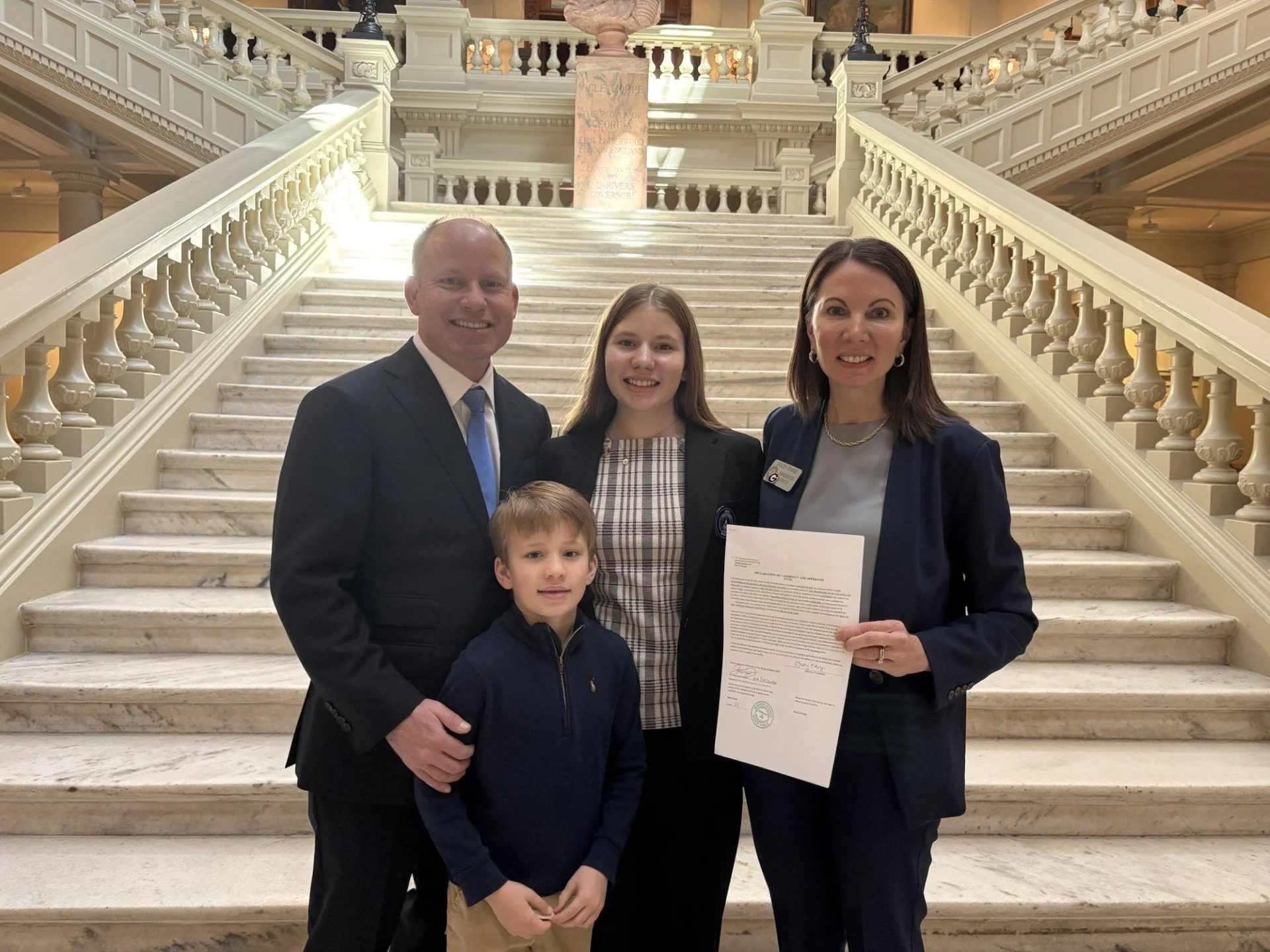
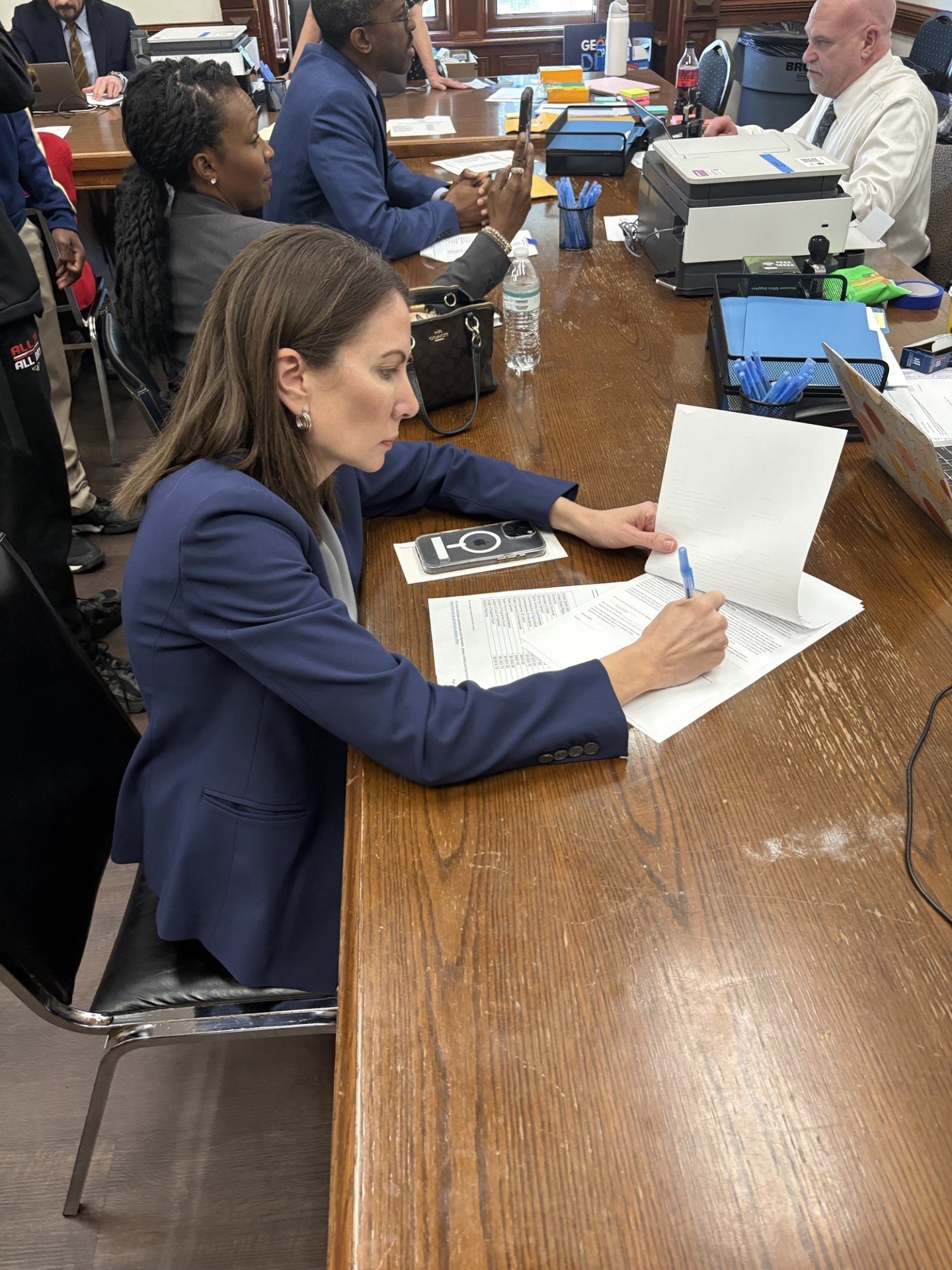
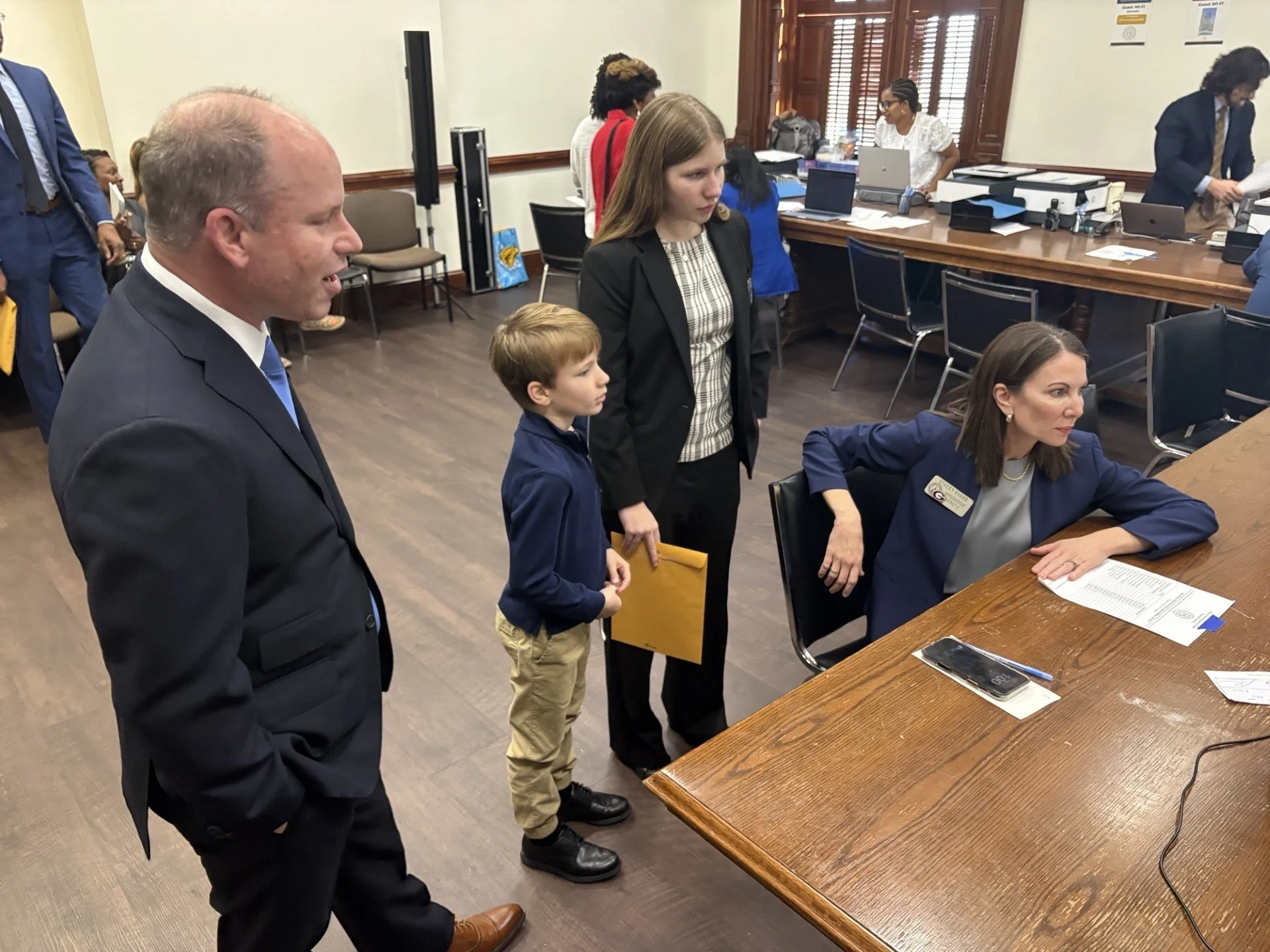
I officially qualified to run for re-election to continue serving as your State Representative.
One of the most special parts of the day was having my family with me at the Capitol as I completed the qualifying process. Public service is truly a family commitment, and I am incredibly grateful for their constant support and encouragement.
Serving the people of District 57 is a privilege I never take for granted. I look forward to continuing the work we’ve started together and building a stronger future for our community.
Bills that Passed the House this Week
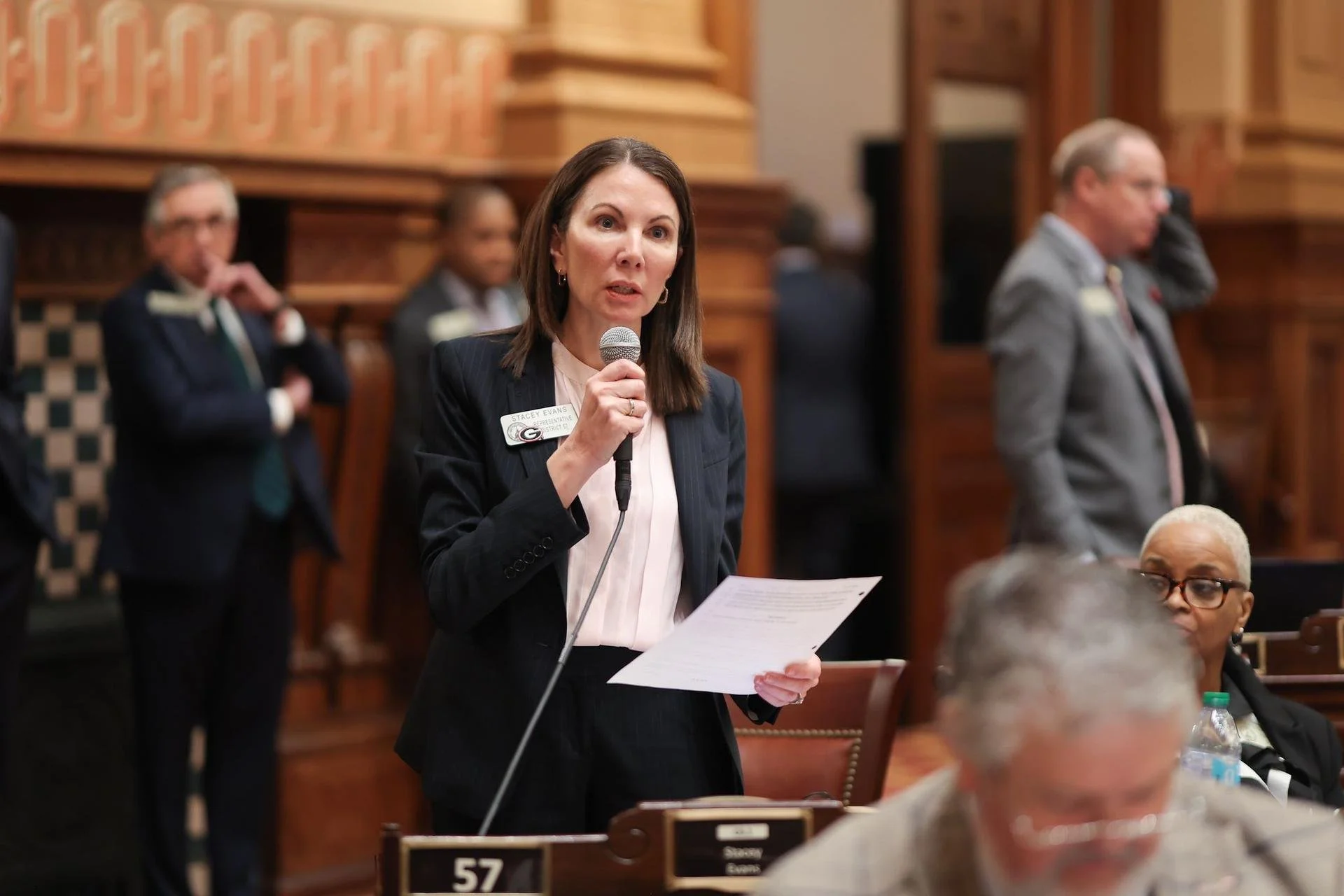
Crossover Week flew by. There were more bills up for consideration than usual, so let's dive in by subject matter.
Healthcare and Medical Access
HB 961: Ending Surprise Ambulance Bills
This bill requires health insurance plans to cover ambulance transportation when it is requested by a first responder or medical professional. Insurance companies have to pay the ambulance provider the rate set by a local law. If one doesn’t exist, the insurance company must pay the lesser of four times the Medicare reimbursement rate, or what the ambulance provider charges. Insurers are not allowed to directly pass any costs to the patient. This bill does not affect air ambulances. Too many Georgians have faced surprise exorbitant ambulance charges after an emergency. This bill would stop that from happening. I voted yes.
HB 1138: Improving Access to Birth Control
This bill allows trained pharmacists to provide self-administered and injectable hormonal birth control without a patient-specific prescription. Adults 18 and older may receive birth control directly from a pharmacist, and minors may receive it if they have had a previous prescription from their physician. Pharmacists are not required to provide contraception and may choose not to do so. With many Georgians having to drive over an hour to see a physician, but all having a neighborhood pharmacist, this will allow better access to birth control. I voted yes.
HB 1296: Suicide Prevention Pilot Program for Veterans and First Responders
This bill establishes the “Breakthrough Treatments for Georgia Heroes Suicide Prevention Pilot Program” within the Department of Behavioral Health and Developmental Disabilities. The program would help veterans and retired first responders with PTSD, severe depression, traumatic brain injuries, and similar conditions by providing access to research and new treatment options. The pilot program would fund treatment costs, research, training, and program support, and would end on January 1, 2030. Our veterans and first responders need help. I voted yes.
HB 1393: More Fair Contracting for Hospitals
This bill aims to enhance healthcare delivery in rural counties with populations under 50,000 by allowing hospital authorities to collaborate on planning, operations, and resource sharing. The legislation authorizes these authorities to engage in mergers, joint ventures, shared staffing, and collective negotiations with third-party payors while maintaining their independence. To facilitate these partnerships, the bill explicitly grants rural hospital authorities and their collaborators immunity from state and federal antitrust laws, declaring their actions to be a matter of state policy intended to displace competition for the public good. This legislation will allow hospitals to collectively bargain for more fair reimbursement rates from insurance companies. This is a basic issue of fairness. I voted yes.
HB 717: Regulations for Psychedelic-Assisted Therapy
This bill creates detailed regulations for psychedelic-assisted (aka Ketamine) treatment and therapy in Georgia. These regulations cover clinic safety, continued medical training programs, emergency procedures, reporting of adverse events, maintaining medical records, and reporting to the prescription drug monitoring program. This program is set to begin on July 1, 2026. Psychedelic-Assisted Therapies are helping Georgians, but we must ensure that these therapies are delivered safely and with professionals who have undergone proper training. I voted yes.
HB 1122: Insurance Coverage for Peripheral Artery Disease Screening
This bill aims to improve the early detection of Peripheral Artery Disease (PAD) in Georgia. It mandates that accident and sickness insurance plans, including those offered by counties and municipal corporations to their employees, and the state Medicaid plan, cover PAD screening tests for individuals at higher risk. At-risk individuals include those 65 or older, those 50-64 with atherosclerosis risk factors, and those under 50 with diabetes and one other risk factor. The bill defines PAD screening tests as noninvasive studies like ankle-brachial index testing. These screenings should be covered at least once every 12 months starting January 1, 2027. I voted yes.
HB 334: Sickle Cell Disease Protection Act Medicaid Review
This bill, known as the "Sickle Cell Disease Protection Act," mandates the Department of Community Health to conduct an annual review of Medicaid-covered medications and treatments for sickle cell disease. It requires public input, particularly from those with expertise in sickle cell disease. The department must submit an annual report to the General Assembly detailing its findings and recommendations, and publish this report on its website, ensuring ongoing evaluation and improvement of care for Medicaid recipients with sickle cell disease. I voted yes.
Education and Student Support
HB 1284: High School Diplomas for Students with Terminal Conditions
This bill allows local boards of education to award high school diplomas to students with terminal conditions receiving end-of-life care. It allows parents/guardians to request diplomas with medical documentation and requires the State Board of Education to waive graduation credit requirements upon request. This bill aims to bring some small token of joy and recognition of accomplishment to students and families facing unthinkable tragedy. I voted yes.
HB 1402: Mandatory Pre-K Vision and Hearing Screenings
This bill requires vision and hearing screenings for Pre-K students. Parents or guardians must be notified if a child does not pass the screening. Schools must report screening data to the Department of Public Health within 30 days of completing the screenings. Each local school will receive a one-time grant of up to $15,000 to implement the requirement. Parents may choose to opt out. Early detection is key to ensuring a vision or hearing problem doesn’t knock our students off the learning track. I voted yes.
HB 1413: DREAMS and Medical School Scholarship Programs
This bill creates two new financial aid programs in Georgia starting July 1, 2026, aimed at helping undergraduate and medical students. The first program, the DREAMS scholarship, provides up to $3,000 per year to undergraduate students at state universities or technical colleges who have unmet financial needs after other aid is applied. To keep this scholarship, students must maintain a 2.0 GPA, complete a financial literacy course, and participate in part-time work, such as a paid job, internship, military service or volunteer position.
The second program offers medical school scholarships for students at University System of Georgia medical schools, covering up to the full cost of attendance. In exchange for this funding, recipients must agree to practice medicine in Georgia for at least four years after finishing their residency, or they will be required to repay the scholarship money.
Access to higher education is something I’m very passionate about. College completely changed the trajectory of my life, and I struggled to stay because of the cost. This bill will help more students reach their full potential. I could not have been more excited to vote YES on this bill.
HB 1413: Mandatory Financial Literacy Course for Graduation
This bill requires Georgia high schools to mandate all students grades 9-12 to complete at least a half-credit financial literacy course to graduate. We should give our students the tools to make responsible decisions. I voted yes.
👇Listen to my speech below
HB 1345: Expansion of Workforce Pell Grants
The federal government now requires states to implement Workforce Pell Grants, which expands access to Pell Grant funds for students enrolled in programs that are shorter than the previous minimum required length. Starting July 1, 2026, programs between 150 and 599 clock hours that can be completed in as little as 8 to 15 weeks may become eligible for Workforce Pell Grants. This will allow more students to complete higher education studies. I voted yes.
Taxes, Finance, and Fiscal Policy
HB 1000: One-Time Income Tax Refunds
This is the enabling legislation for the Governor’s stated goal to give “one-time” income tax refunds. This is the same as last year’s HB 112, which passed unanimously from both chambers: $250 for single filers, $375 for head of household, and $500 for married couples filing jointly. I voted yes because providing across the board tax relief when we can is a laudable goal. Not like gutting local governments’ budgets as other legislation I voted against would do.
HR 1114: Constitutional Amendment on Property Tax and Homestead Exemptions
This constitutional amendment significantly expands the General Assembly’s authority over local property taxes and school funding by allowing up to a 100% homestead exemption, potentially eliminating local ad valorem property taxes for homeowners by 2032. It would authorize new local homestead option sales taxes to offset lost revenue, permit the legislature to require referendums for millage rate increases, and allow state intervention in local bonds and revenue shortfalls by simple majority vote.
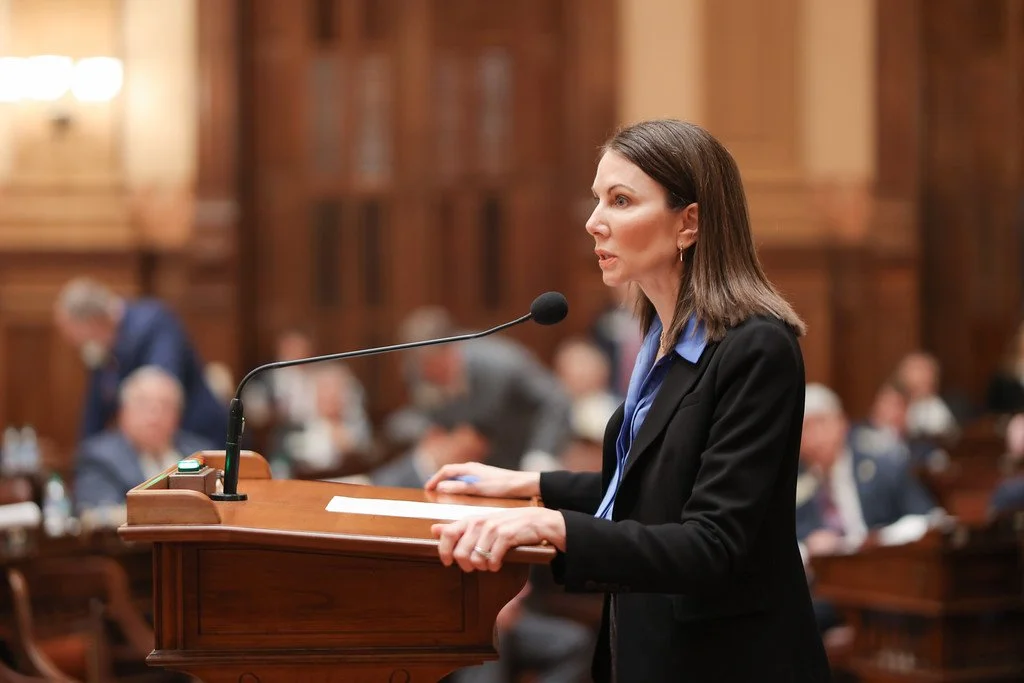
While eliminating property taxes for homeowners sounds nice, this bill would only cause local governments to increase sales taxes, would still likely bankruptcy many cities and counties, and would bludgeon our schools’ budgets. This is not good policy. We need this money to fund our public schools, and we certainly need a better plan that does not change haphazardly. I spoke against this resolution and voted no.
👇 Listen to my speech below
HB 1077: Sales Tax Exemption Extension for Nonprofit Fine Arts
This bill extends the sales tax exemption for tickets sold by nonprofit fine arts groups from 2027 to 2032. These financial benefits apply to nonprofit organizations and museums that promote the arts through performances, exhibits, and educational programming. By shifting the repeal date from 2027 to 2032, the state aims to continue supporting fine arts such as theater, symphony orchestra, and dance. I voted yes.
HB 1148: Income Tax Credit for Conservation Property Donation
This bill doubles the income tax credit for donating property to the state for conservation use from the lesser of $500,000 or 25% of the property’s market value to $1 million or 50% of the property’s market value. It also reinstates the total credits awarded per year from $4 million to $30 million. (These were reduced in 2021.) I voted yes.
HB 1116: Local Property Tax and School Funding Authority
This bill expands the General Assembly’s authority over local property taxes and school funding by placing limits and restrictions on how local governments regulate homestead exemptions, and otherwise seeks to interfere with local governments ability to levy taxes. This bill would create a large hole in revenue for local governments leaving only two paths forward: a shift towards sales tax (which effects everyday Georgians), OR cuts in services like parks, fire, police, and most importantly, schools .
The 32-page bill was brought to us mere minutes before floor debate on the bill. This is not responsible and is terrible policy. I voted no.
Public Safety and Criminal Justice
HB 1230: Restrictions on Drones Near Prisons
This bill changes the law by making it illegal to fly a drone over or near prisons, with limited exceptions for law enforcement and public safety. Additionally, it requires posting warning signs and authorizes the seizure of illegal drones. Delivery of contraband like cell phones and weapons to prisons through drones is a rampant problem in our prisons. This bill aims to curb it. I voted yes.
HB 1290: Expanding Definitions of Elder Abuse and Sexual Predators
This bill expands the definition of Sexual Abuse of an Elder Person or Disabled Adult to include all persons, not only caretakers. It also adds most new sex crime convictions to the definition of “dangerous sexual predator,” and therefore increases requirements. These crimes will require in-person reporting twice per year instead of once, make electronic monitoring easier to obtain if necessary, and prevent work/volunteering within 1000 feet of a place where minors congregate. I voted yes.
HB 1365: Additional Superior Court Judge for Fulton County
This bill adds a 21st superior court judge to Fulton Superior Court. The additional judge is to be initially appointed by the Governor for a term starting January 1, 2027, and ending on December 31, 2028. Following this initial term, a successor will be elected in the 2028 nonpartisan general election for a four-year term. This new judge will be entitled to the same powers, jurisdiction, and compensation as the existing judges in the Atlanta Judicial Circuit. Fulton Superior Court currently has 20 judges, but has a workload that could support 26 judges. This is at least a small step toward more resources to allow cases to move more efficiently. This is good customer service and good government. I voted yes.
HR 1243: Constitutional Amendment for Georgia Next Generation 9-1-1 Fund
The Georgia Next Generation 9-1-1 Fund is a dedicated, non-lapsing account designed to support the expansion, maintenance, and operation of emergency 9-1-1 systems throughout the state. This resolution provides a constitutional amendment to create the Georgia Next Generation 9-1-1 Fund and allow the General Assembly to dedicate and deposit revenues raised from specific sources for this fund into the fund. This will provide much needed improved access to emergency 9-1-1 in our rural counties. I voted yes.
HB 1409: Mandated Reporters for Child Abuse Expansion
This bill adds firefighters and animal service workers, such as animal control officers and animal shelter personnel to the list of mandated reporters for child abuse. The bill requires that oral reports be followed by a later written report submitted to the Division of Family and Children Services (DFCS) of the Department of Human Services (DHS). The bill also allows agencies that employ mandated reporters to authorize employees to submit reports through a secure web-based platform and sets forth requirements for these platforms and for training for their use. I voted yes.
HB 1324: Repealing the State Ban on Gun Silencer - FAILED!
This bill would repeal a previous ban on silencers for guns and declassify them as dangerous weapons, meaning they could be legally owned in the state of Georgia. Silencers make it harder to find killers because they lower the sound –harder for school children who need to hide or flee a shooter and harder for law enforcement to make an arrest. Silencers are cop killers. I voted no and this irresponsible bill did not pass!
HB 1283: Establishment of Family Justice Centers
This bill allows counties, municipalities, and district attorneys to establish Family Justice Centers. These centers combine law enforcement and victim service providers in a single location to help victims of family violence, sexual assault, human trafficking, and child/elder abuse. The centers can be operated by a local government, a district attorney’s office, or a nonprofit. The center must have a board of directors with representation from local officials and community organizations. The Criminal Justice Coordinating Council can give grants to support these centers. Family Justice Centers make it easier for victims to seek and receive help. I voted yes.
HB 892: Restrictions on Massage Therapy Business Hours
This bill prohibits the operation of massage therapy businesses between 10 p.m. and 6 a.m., starting August 1, 2026. We all know that a business advertising massages after 10 p.m. is most likely engaging in bad activity and many of these establishments are a front for sex trafficking rings. This is a step towards deterring these heinous actors in our state. I voted yes.
HB 1076: Felony Crime of Obstructing Law Enforcement with a Motor Vehicle
This bill adds a new felony crime of Obstructing a Law Enforcement Officer with a Motor Vehicle, punished by 1 - 5 years imprisonment and a fine of up to $100,000.00. This bill does not include the appropriate language to ensure that it only applies to those that intentionally violate the law or intend to cause harm, as all other laws establishing felonies. I pointed out this problem in my question to the Speaker. I voted no.
👇 Listen to my Parliamentary Inquiry below
HB 421: Felony for Interstate Travel to Entice a Child
This bill adds the phrase “or travels from another state” to the already existing felony of Enticing a Child for Indecent Purposes. We previously did not include predators who traveled to Georgia to take advantage of our children. This is another step to hold these people responsible for taking advantage of our most vulnerable. I voted yes.
Public Welfare and Labor
This bill would create a claims process for property owners against cities and counties if certain laws are not enforced. The bill is vague on how a property owner would establish that a city or county is not enforcing laws or how damages could be proved. This legislation invites property owners to flood city and county law departments with frivolous claims relating to loitering, panhandling, and other crimes. While homelessness and the attendant circumstances are not what we want on our streets, the state has done nothing to support services needed to address the root causes of homelessness. This legislation will cause more harm than good. I voted no.
👇 Listen to my speech below
HB 1118: Maternal Birth Leave for Public Employees
This bill provides 120 hours of maternal birth leave for public officials and employees. I voted Yes.
HB 1187: Prohibiting NDAs in Childhood Sexual Abuse Claims
This bill would prohibit contracts or agreements that may be intended to conceal details of claims of childhood sexual abuse from being enforced in Georgia courts, putting an end non-disclosure agreements (NDAs) and similar clauses that silence survivors about their abuse. It’s intended to ensure that settlement terms can’t be used to hide the facts of an abuse case, making it against the public policy of the state to enforce such concealment. Personal identifiable information would still be deemed confidential. I voted yes.
HB 1234: Payment of Funeral Costs via Life Insurance Benefits
This bill allows a named beneficiary of a group term life insurance benefit from the State Employees' Assurance Department to directly pay a licensed funeral director or embalmer for the cost of funeral services. By assigning these funds, families can more easily cover burial, cremation, and transportation costs for deceased public employees. I voted yes.
HB 947: SNAP Restrictions and EBT Photo ID Requirements
Currently, people in Georgia can use SNAP to buy most grocery store foods as long as the food is not hot or made in the store. This bill limits low nutritional food, sugary drinks, and made-to-order items like coffee and smoothies from being able to be purchased with EBT. It would also add photo IDs to SNAP cards, require citizenship checks, and make people reapply every year. DHS did not ask for this bill, and expressed significant concerns at committee about the additional administrative burden. I voted no.
General Regulation, Zoning, and Gaming
HR 450: Legalization and Regulation of Sports Betting - Failed
This resolution is a proposal that would amend the Georgia Constitution to legalize and regulate sports betting within the state. While most forms of gambling are currently prohibited, this resolution would allow the General Assembly to establish laws for sports betting and create a dedicated "Georgia Sports Betting Proceeds Trust Fund" to manage the revenue. The majority of the tax proceeds—85% of the first $150 million annually and all revenue exceeding that amount—would be directed toward educational programs, specifically voluntary pre-kindergarten and college scholarships like the HOPE scholarship. Additionally, 15% of the initial $150 million would be set aside for gambling addiction prevention and treatment services.
The resolution would also put the decision of whether to approve this measure up to a vote by Georgia citizens. I am generally in support of this measure as long as the funds are used for education in the state, which this bill ensured. I voted yes, but this resolution failed to pass.
HB 1166: Zoning Exemptions for Tiny Homes
This bill expands “tiny homes.” It amends Georgia zoning laws to exempt residential dwellings of 400 square feet or less from zoning decisions. It prevents local governments from using zoning to regulate these smaller dwellings, but preserves their authority regarding building codes, septic systems, historic districts, manufactured homes, and flood insurance requirements. This bill would allow more families to take in friends and loved ones on a temporary basis without running afoul of zoning regulations. I voted yes
A Huge Thank You to Our Pages This Week!
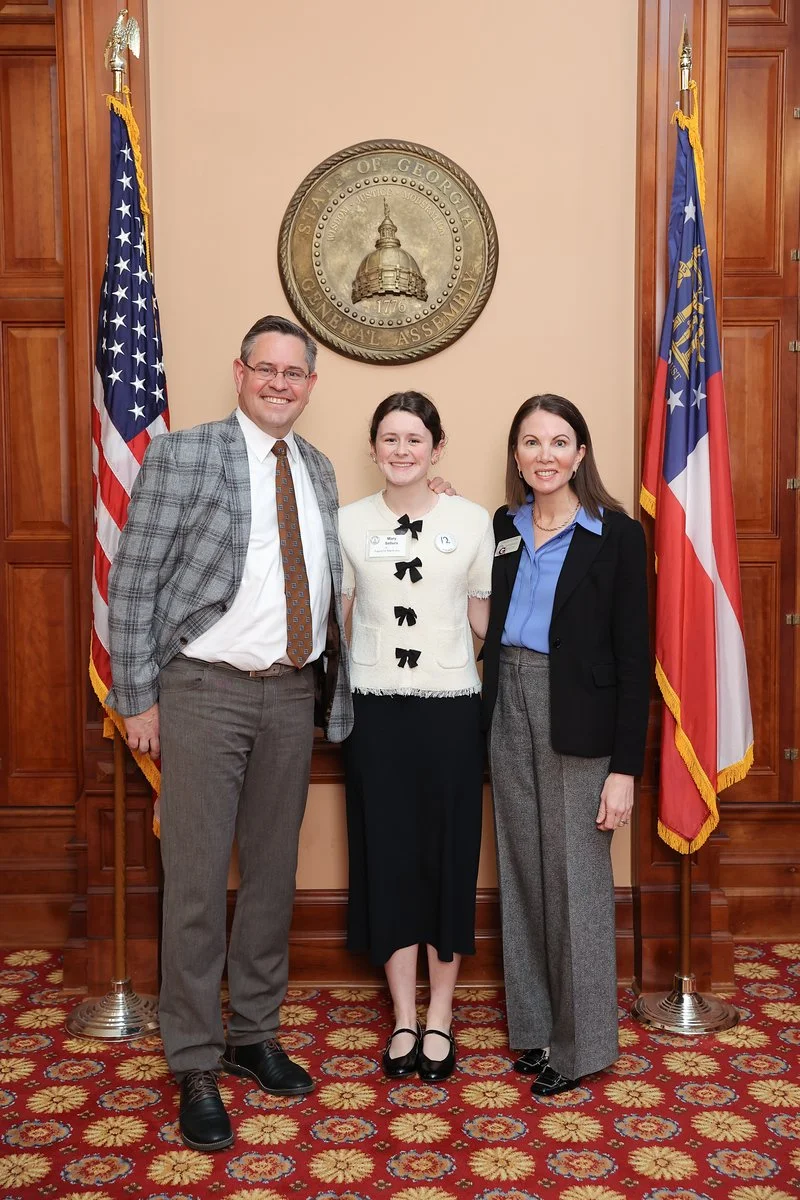
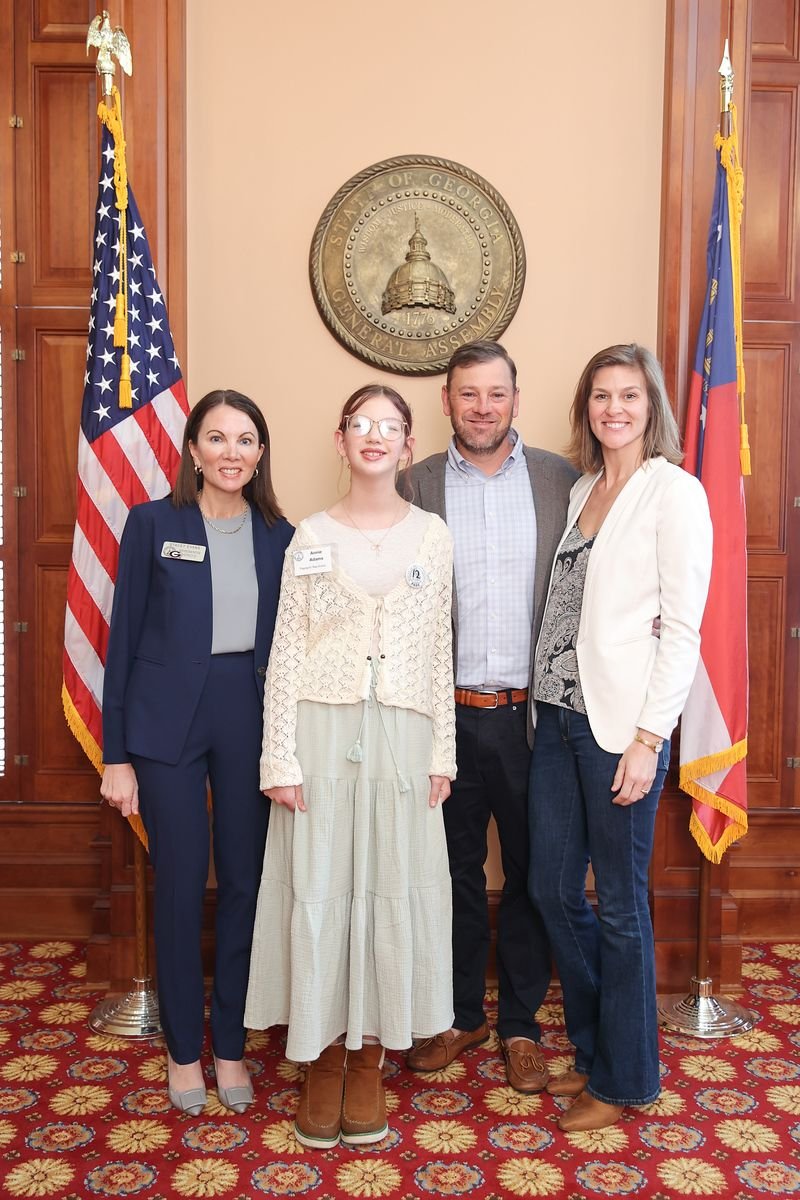
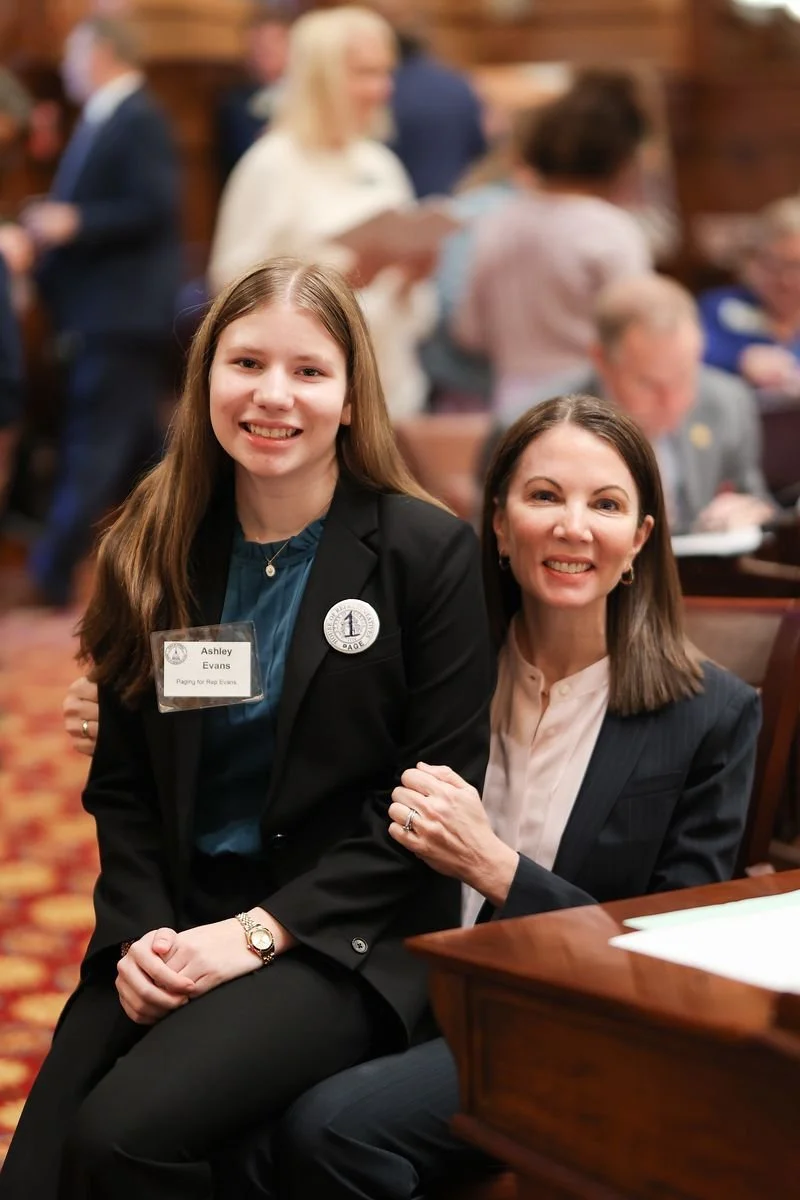
I also want to take a moment to thank the incredible students who served as my legislative pages this session. Mary Sellers Conley, Annie Adams, and my own daughter Ashley Evans were such a great help during one the busiest weeks of the session!
The Page Program gives young Georgians the opportunity to see the legislative process up close. Pages help deliver documents across the Capitol, assist members on the House floor, and learn firsthand how our state government operates.
It is always inspiring to meet these students and see their curiosity and enthusiasm for public service.
Learn more about the page program here - Georgia General Assembly House Page Program
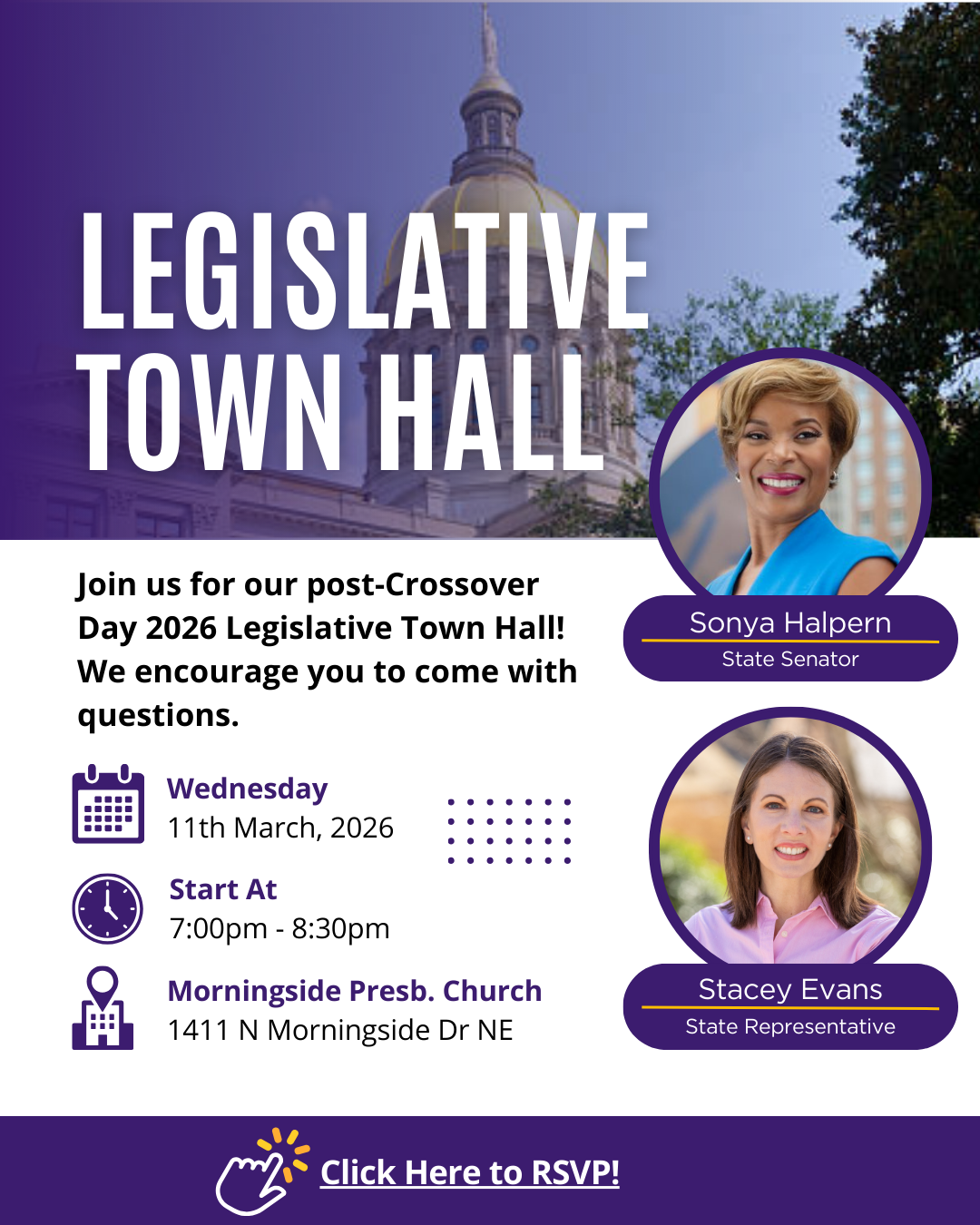
Post Crossover Legislative Town Hall — This Wednesday!!
Make sure your calendars are marked for my upcoming joint townhall with State Senator Sonya Halpern. We will be going over what we have witnessed so far under the gold dome.
We also will be answering questions, so please come with a curious mind! RSVP is not necessary but encouraged so we can anticipate crowd size. RSVP to Elijah Johnson at elijah@staceyevans.com.
What’s next?
Crossover is behind us, but there is still much work to be done. We will be reviewing bills that have crossed over from the Senate. I encourage you to stay engaged. Please continue to reach out to my office with your questions, concerns, and ideas. It is a privilege to serve you, and I remain committed to fighting for District 57 every single day. Stay up to date with the links below!
⚖ Tune in the Appropriations Committee Meeting at 10:15am - Monday
👩⚖️ Tune into the Rules Committee Meeting at 11am - Monday
📸 Watch the House Floor Chamber at 10am - Monday
In service,
Stacey Evans